

Colors of Northern India: 14-Day Sketching Journey

25 Sep – 8 Oct 2027 · 14 Days

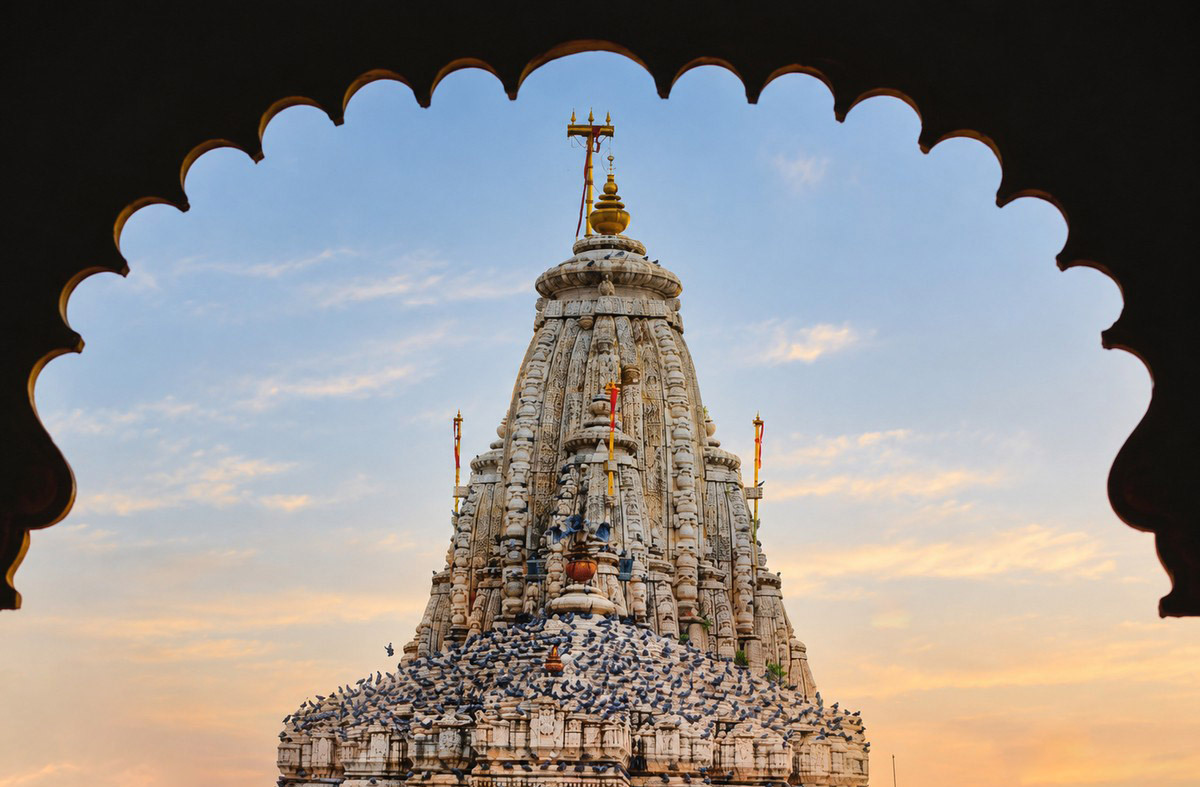
Jagdish Temple spire framed by a scalloped arch, Udaipur

6 Good Reasons That Make This Trip Ink-Redible

  • BACKED BY A REPUTABLE COMPANY

    Wayward Paper is part of Leatherback Travel: 489+ trips run, 4,400+ travellers, since 2019. You’re not the test run.

  • YOU CAN FORGET ABOUT LOGISTICS & MEALS, AND JUST SKETCH

    Hotels, airport transfers, the drives between cities and one flight from Udaipur to Delhi are arranged before you land. So is breakfast every day and at least one main meal on every day of the tour. A trip leader stays with the group throughout, so there are no tickets to buy and no routes to plan. You just sketch and explore.

  • LEARN FROM A SKILLED ARTIST

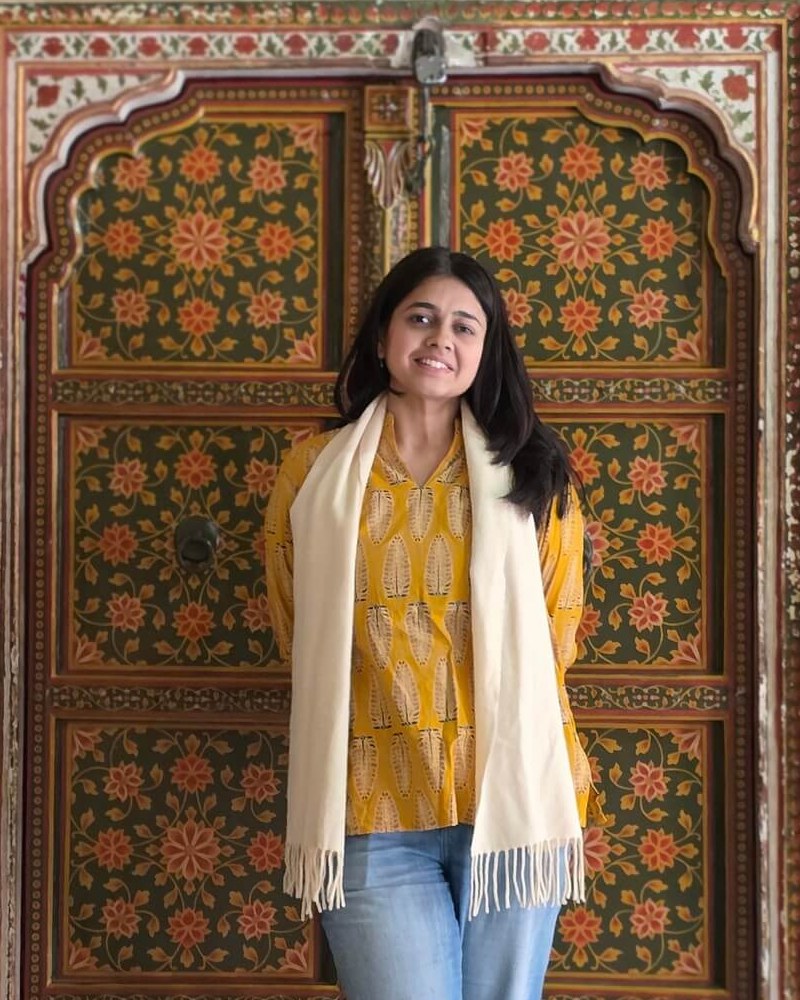
    Swati, an Indian watercolor artist and art educator, leads every sketching session on this trip in person. She runs regular watercolor workshops and an online course, and she paints alongside you, helping you to become a better sketcher.

  • ALL THE MUST-SEE SIGHTS, SKETCHED IN ONE TRIP

    On your first afternoon in Delhi, you draw India Gate as the sandstone warms in the softening light. On Day 2, you sit in the garden of Humayun’s Tomb, often called a forerunner of the Taj Mahal. Then you meet the Taj itself from a small rise beside its East Gate, a view most sketchbooks never hold, and see it again at sunrise while the marble is still pink. In Jaipur, you start among the giant stone instruments of Jantar Mantar, then sit across from the 953 windows of the Hawa Mahal and visit Amer Palace on its hillside above Maota Lake. In Jodhpur, you walk down into the blue lanes beneath Mehrangarh Fort. In Udaipur, you put the City Palace and the Lake Palace on the page from the water’s edge at Ambrai. The sights North India is best known for are on this route, with time at each one to finish the page.

  • EXPERIENCES YOU WON’T FIND ELSEWHERE

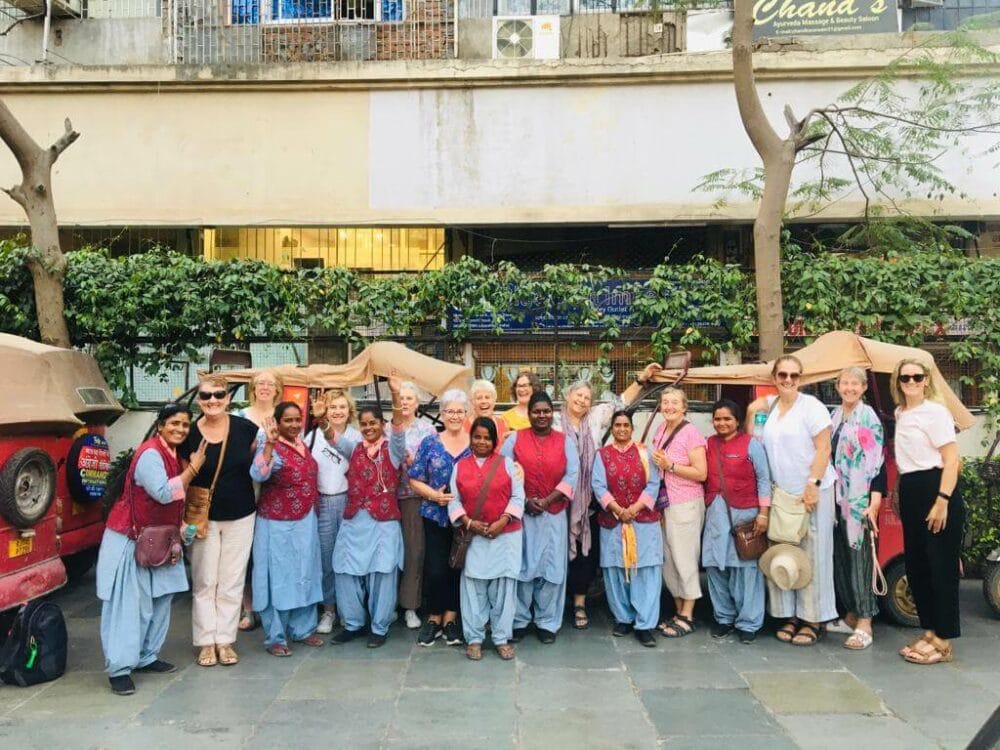
    Ride through Jaipur’s bazaars in a pink electric rickshaw driven by one of the women who part-own the Pink City Rickshaw Company, and stop where the locals stop for tea and sweets. Eat lunch at Sheroes Hangout in Agra, a café run entirely by women who survived acid attacks. Walk through Ranakpur, a 15th-century Jain temple in the forest of 1,444 carved pillars where no two are alike, then draw its white marble domes rising out of the trees. On your last evening, climb to the rooftop of Haveli Dharampura, a restored 19th-century mansion in Old Delhi, as kites rise over the rooftops and the light softens. Few of these are on the usual North India list, and each one is a page waiting for your sketchbook.

  • MEET THE MAKERS BEHIND THE CRAFT

    In Agra, you walk through the workshops of families whose ancestors are said to have worked on the Taj, still setting tiny pieces of coloured stone into marble by hand, and then draw the same inlay at the Tomb of Itimad-ud-Daulah. In Jaipur, you watch artisans carve patterns into teak blocks and stamp them with natural dyes, then take a block and try it yourself. In Udaipur, you watch a painter work at close range with brushes of squirrel hair, so fine that a single stroke can be a hair’s width.

Your Watercolor Artist

Swati standing in front of a painted palace doorway, wearing a mustard printed top and a cream fringed scarf

Swati

Swati, an Indian watercolor artist and art educator, leads every sketching session on this trip in person.

Learn More

Trip Details

Trip Breakdown

25 Sep 2027
Ends: 8 Oct 2027
$3,989 USD
Deposit
$997 USD

Private room supplement: +$1,354 USD (total $5,343 USD) · Private room deposit: $1,336 USD

Non-participating companion (shared room): $3,475 USD · Companion deposit: $869 USD

Length
14 days / 13 nights
Details
  • 30-day cooling-off period applies (bookings 120+ days out)
  • Lifetime Deposit: if you need to cancel, your deposit is transferable to any Leatherback trip
  • Twin-share is the base rate; private room available as a supplement
  • Please refer to our payment terms in the FAQs.
Meeting Point
New Delhi
Ending Point
New Delhi
Group Size
Maximum 12
Included
  • Wayward Artist’s Pack, yours to keep
  • Tuition from your Wayward Paper leading artist
  • 1 internal flight, Udaipur to Delhi
  • All accommodation, meals, entrance fees and internal transport as stated in the itinerary
  • Arrival and departure airport transfers
  • A top-rated ground guide
  • Jaipur’s old city by Pink City Rickshaw, a block-printing workshop in Jaipur, marble-inlay workshops in Agra, a miniature-painting studio visit in Udaipur and a heritage walk through Old Delhi
  • All listed activities and more!
Not Included
  • International flights
  • Travel insurance (mandatory)
  • Visa fees (e-visa)
  • Meals not listed in the itinerary
  • Additional hotel nights & late checkouts
  • Drinks and other personal expenses
  • Tip kitty (see FAQs for more information)

Itinerary

A colorful Delhi street scene
1 / 2

Day 1 · Delhi: Arrival and India Gate

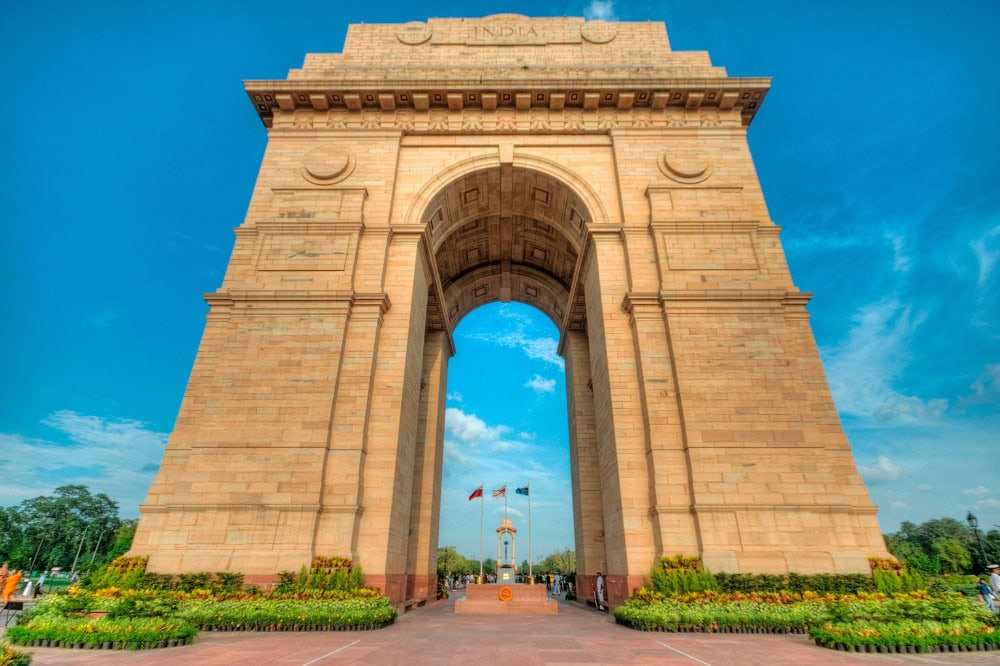
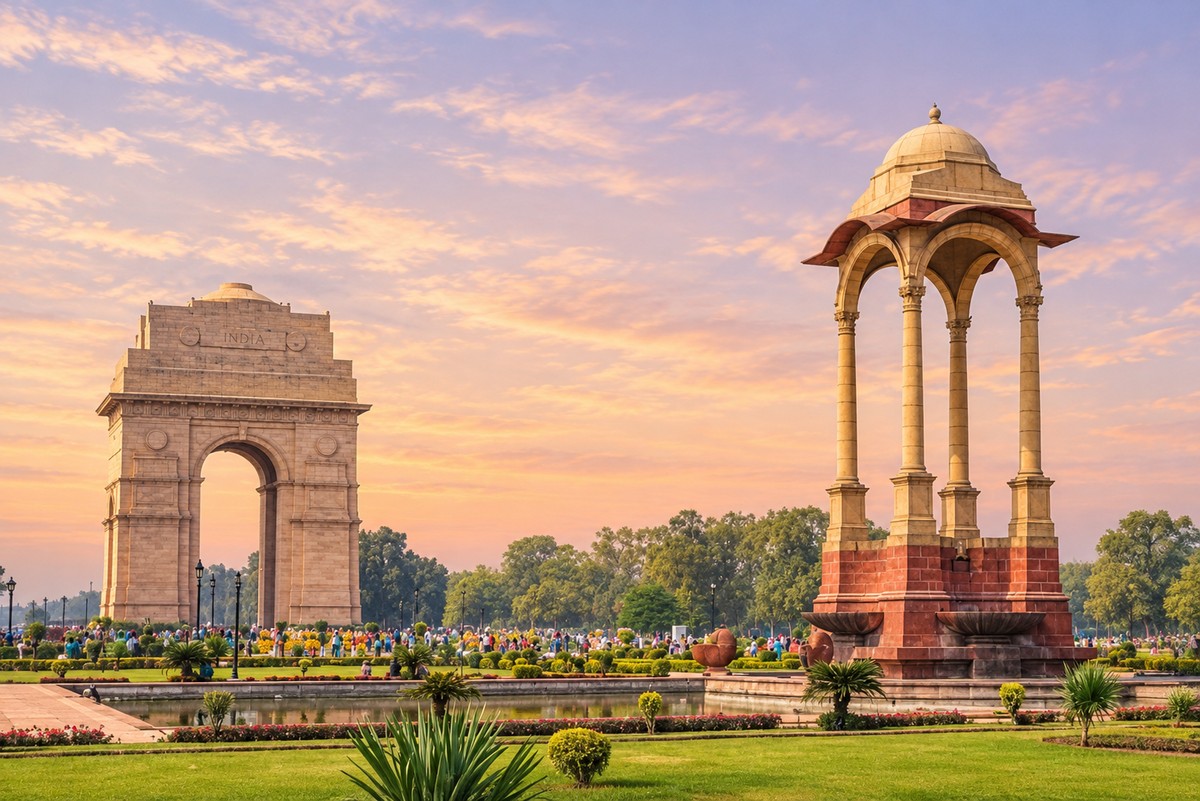
Individual airport arrivals and transfers take you to your hotel, and at 1 pm the group gathers for a welcome and introductions to your trip leader and leading artist. The sketchbook starts small: your first page is a single cup of chai, drawn quick and loose to get the hand moving. Then we head to India Gate, one of Delhi’s most recognisable symbols, designed by Edwin Lutyens and unveiled in 1931. The arch rises 42 metres in yellow and red sandstone, and more than 13,000 names of soldiers are carved into its walls. As the afternoon light softens, the sandstone warms and Delhi families begin to spread out across the lawns around it. You choose your corner: the arch against the sky, the lines of names running across the stone, or the picnickers on the grass. The session is long and unhurried, and your leading artist draws alongside you, so your first page has a real subject to stand on. In the evening we move to Pandara Road, a market close to India Gate lined with North Indian restaurants that have fed Delhi for decades. The group sits down to a welcome dinner there, where butter chicken and dal makhani are the dishes people come for.

Accommodation:
TBA
Included:
Dinner
Sketching Sessions:
India Gate
Parrots in a quiet Delhi garden
1 / 2

Day 2 · Delhi: Parrots in a Quiet Garden and the Dome That Came Before the Taj

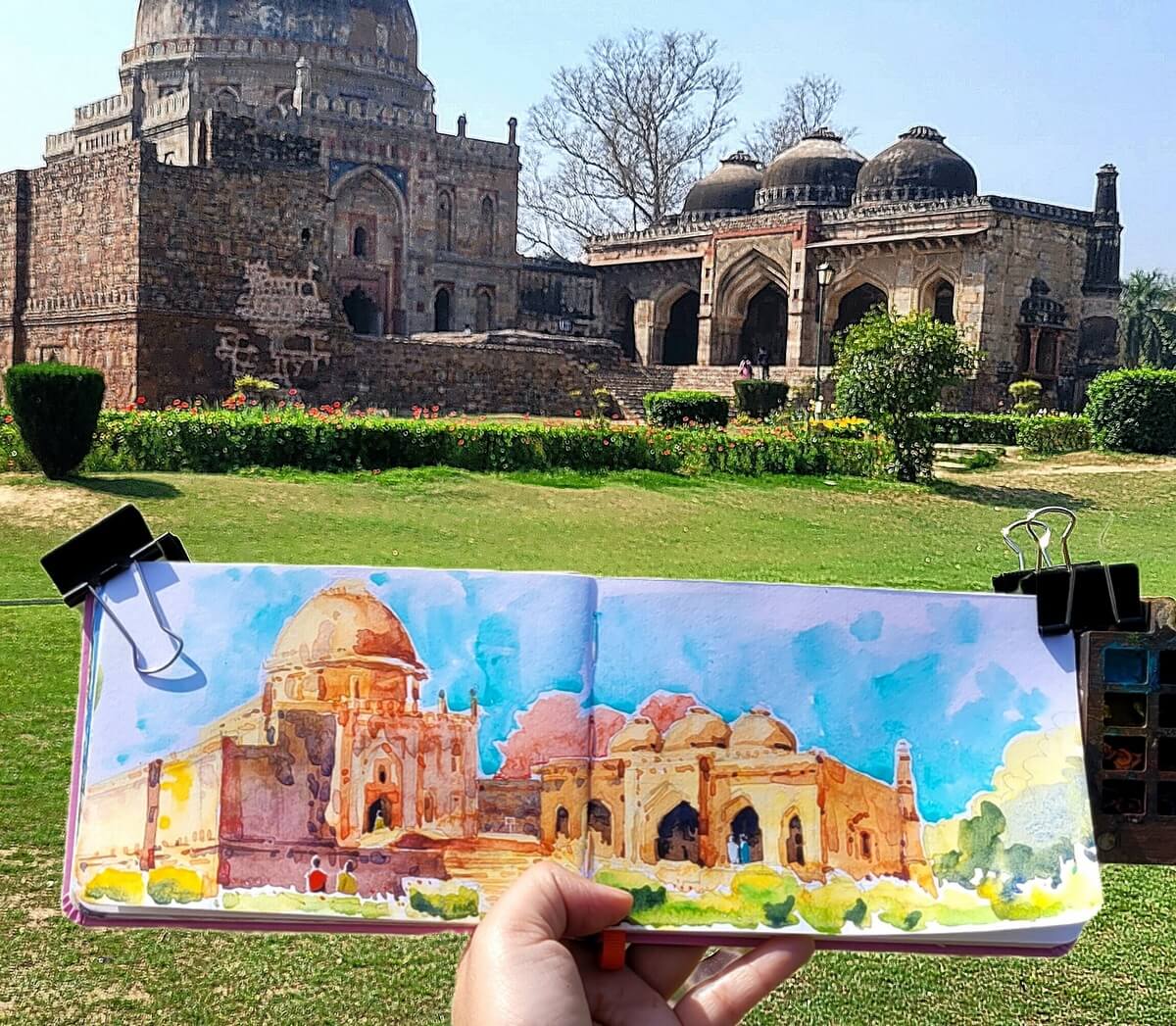
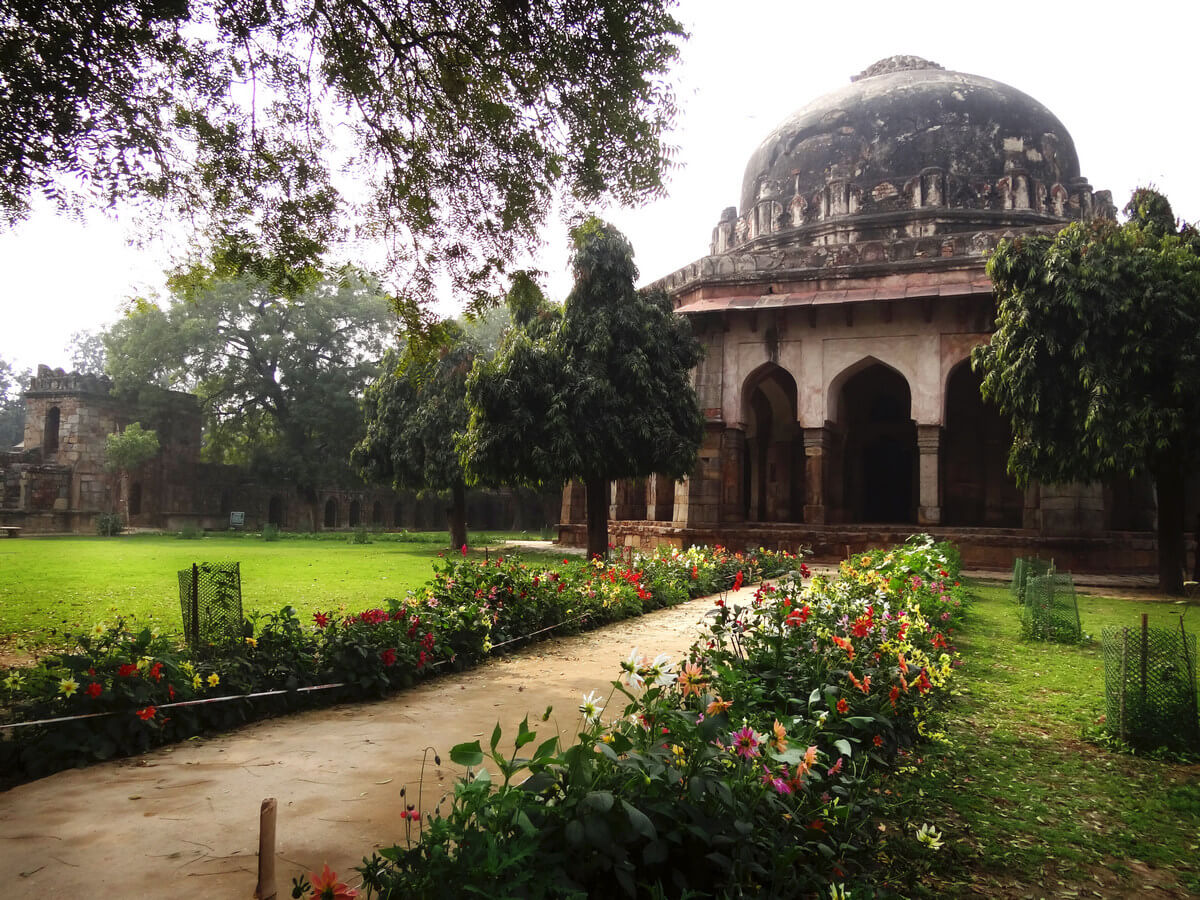
The day begins in Lodhi Garden, a quiet, leafy park of wide lawns and old trees where parrots fly between the branches. Domed monuments from the 15th-16th centuries rise among the trees. The Bara Gumbad and its mosque sit near the Sheesh Gumbad, whose dome was once covered in blue glazed tiles, most of them now gone. Your leading artist starts with the question every dome asks: how do stone and trees share one page? You choose a dome and a tree, and give the morning to the way they sit together.

Lunch is in Champa Gali in Saket, a tree-lined lane with a bohemian charm that feels like a quiet escape from the city’s bustle. Fairy lights hang above the street, graffiti and murals cover the walls, and cafés, studios and craft spaces fill its colourful corners. Delhi Tourism compares the mood to the alleys of Paris, and it’s easy to see why.

In the afternoon we go to Humayun’s Tomb, set in a Mughal garden divided into four by water channels. It was the first garden tomb of its scale in India, and it is often called a forerunner of the Taj Mahal you meet tomorrow. You choose your position: the great dome above the water, or the red sandstone and white marble of the walls. As the afternoon shadows lengthen, the sandstone gains depth, and the page does too.

Accommodation:
TBA
Included:
Breakfast, Lunch
Sketching Sessions:
Lodhi Garden; Humayun’s Tomb
The Taj Mahal seen from the garden at Taj Khema, Agra

Day 3 · Delhi to Agra: A Different Way to See the Taj Mahal

The road south to Agra takes four to five hours, depending on the traffic. Lunch comes along the way, and by the time the city arrives you are ready to stretch your legs and your eyes. Agra is where the Mughals built their grandest monuments, and the one you came for is waiting at the end of the afternoon.

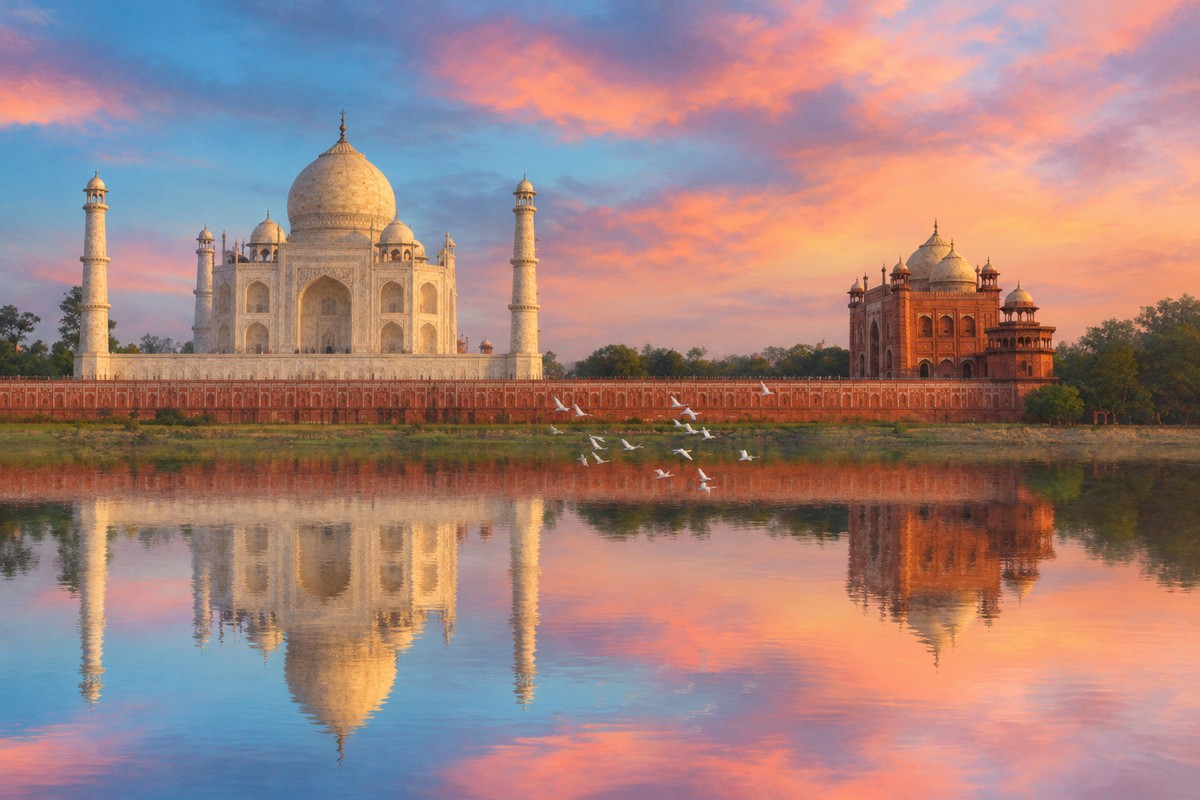
Late in the day we go to Taj Khema, a garden just outside the Taj Mahal’s East Gate. Almost everyone meets the Taj head-on, from the long reflecting pool, and that is the view a thousand sketchbooks already hold. Here a small rise in the grounds gives you the Taj from a different side, with the dome, the minarets and the trees around them in a composition of their own. Your leading artist helps you choose what to keep and what to leave out, and you settle in for a long seated session as the marble turns from white to gold, so the colours on your page keep changing as you work.

Day 4 begins with the Taj at sunrise, and by then you will know it well.

Accommodation:
Golden Tulip Hotel Agra or similar
Included:
Breakfast, Lunch
Sketching Sessions:
Taj Khema
The Taj Mahal and its gardens in Agra

Day 4 · Agra: The Taj at Sunrise, and the Jewel Box That Came First

The day begins at the Taj Mahal at sunrise, when the marble is still pink and the crowds have not arrived. We go on to Agra Fort, where Akbar’s red sandstone walls meet the white marble palaces of Shah Jahan, who spent his last years here looking out at the Taj.

Lunch is at Sheroes Hangout, a café run entirely by women who survived acid attacks. They cook, serve, keep the accounts and run the place, and one of them designs the clothes sold in the café. In a country where survivors are often pushed to the edge of society, they have chosen to be seen, and many of them say they no longer hide their faces. Sitting down to eat in their café is one of the most moving moments of the trip.

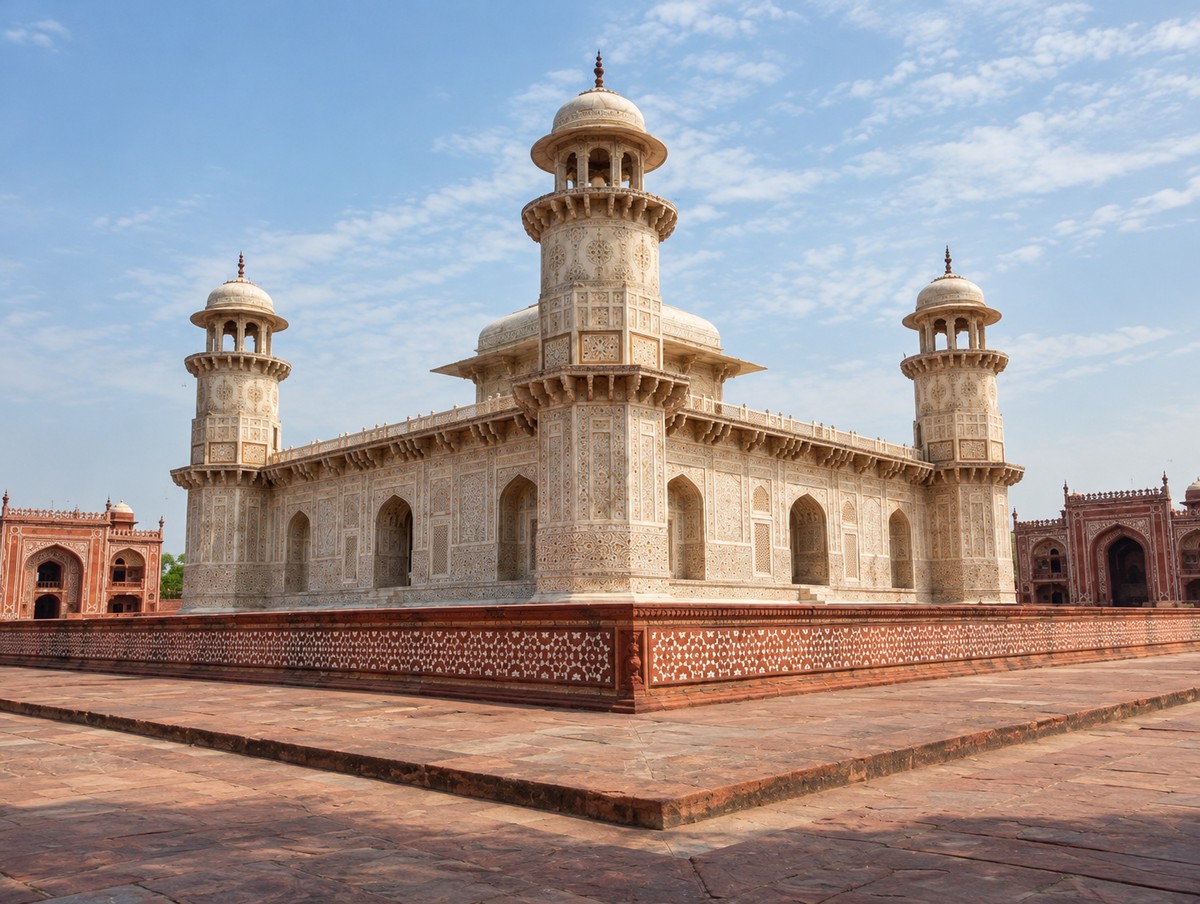
In the afternoon we walk through Agra’s marble-inlay workshops, where families whose ancestors are said to have worked on the Taj still set tiny pieces of coloured stone into white marble by hand. The same craft is the reason for the session at the Tomb of Itimad-ud-Daulah. It was the first Mughal building made entirely of white marble and the first to use that inlay on a large scale, which earned it the name “jewel box”. You choose between the inlaid panels, the carved marble screens, or the small tomb itself in its garden.

Accommodation:
Golden Tulip Hotel Agra or similar
Included:
Breakfast, Lunch
Sketching Sessions:
Itmad-ud-Daulah
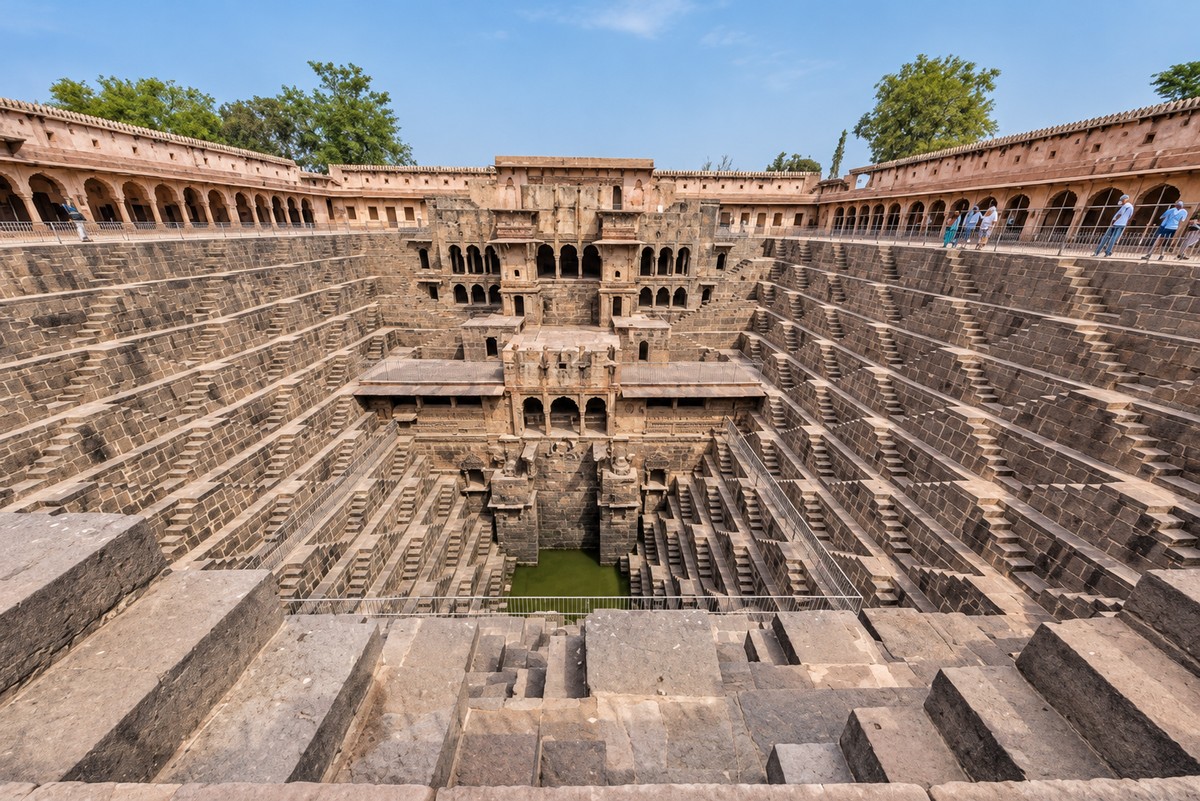
Chand Baori stepwell with its zigzag steps, Abhaneri

Day 5 · Agra to Jaipur: Down the Stepwell of 3,500 Steps

The road west leaves Uttar Pradesh and enters Rajasthan, and the landscape turns drier and more open. The drive to Jaipur is about 240 km, and halfway along we turn off for the village of Abhaneri.

Here stands Chand Baori, a stepwell dug in the 9th century to hold water in a land that rarely has enough. Its 3,500 narrow steps fall in criss-crossing flights down 13 levels, like an upside-down pyramid, and the air at the bottom is noticeably cooler than at the top. Pilgrims once washed their hands and feet here before entering the Harshat Mata Temple, the goddess of joy, whose carved ruins stand just across the way. It is worth looking at slowly, with the sketchbook still closed, because the symmetry is the thing: every flight of steps echoes the one beside it. Lunch is on the road, and we reach Jaipur in the afternoon.

The evening is for settling in at Arya Niwas, a family-run hotel built around a century-old haveli, with wide lawns in the middle of the city that make it feel like a garden hidden behind the street.

Accommodation:
Arya Niwas Jaipur or similar
Included:
Breakfast, Lunch
Sketching Sessions:
None
Jantar Mantar sundial, Jaipur
1 / 2

Day 6 · Jaipur: A Sundial for the Sky, and a Palace of 953 Windows

The morning begins at Jantar Mantar, an open-air observatory that Maharaja Sawai Jai Singh II completed in 1734, built from stone and marble rather than brass and glass. Nineteen enormous instruments stand in the open air, each shaped for a different measurement of the sky, and the largest is a sundial 27 metres tall that is said to tell the time to within two seconds. You walk among stairways, bowls and curved walls that look like abstract sculpture, and the shadows on them slowly move as you look.

For the old city, we hand the map to someone else. The Pink City Rickshaw Company’s drivers are all women, trained to drive electric rickshaws, many from low-income households, and they are part-owners of the business. When the first of them took to Jaipur’s crowded streets, some of the men who had always driven those lanes jeered at them. Today the women steer through the traffic with total confidence, and heads still turn when a bright pink rickshaw glides into the bazaar. Your driver takes you through the lanes she knows best and stops where the locals stop: tea at a street corner, and sweets and snacks at food counters the company trusts.

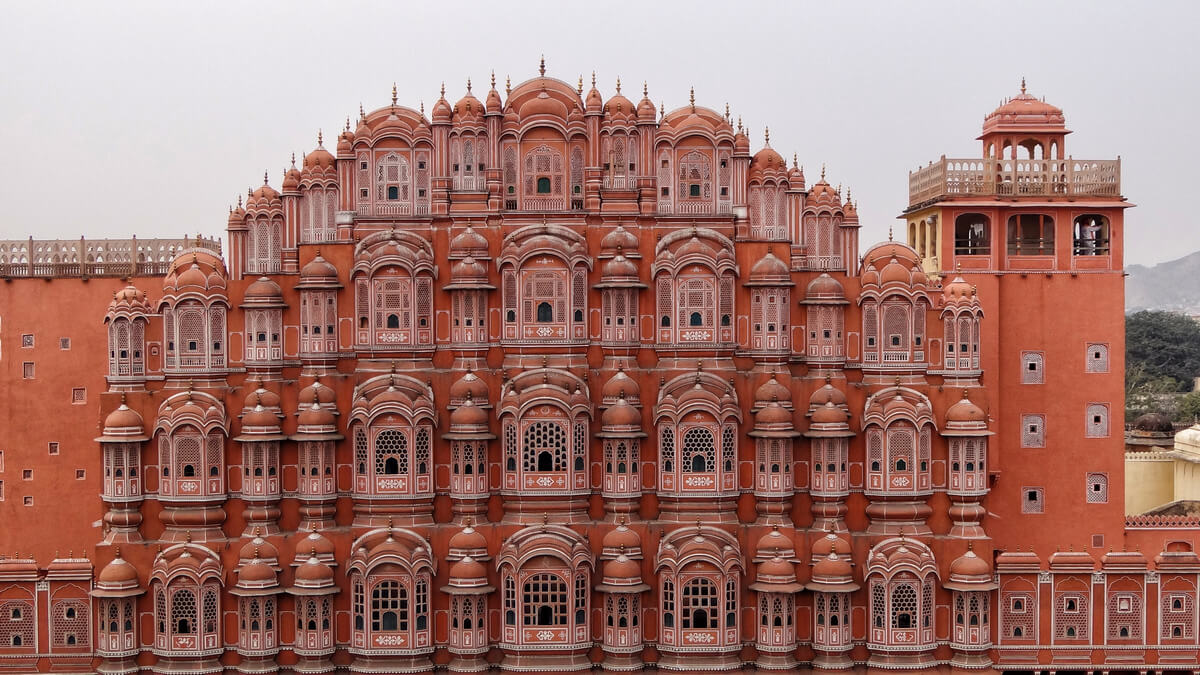
In the afternoon we settle into a pre-booked rooftop café facing the Hawa Mahal, for a long sketching session. Built in 1799, the palace has 953 small windows, designed so the women of the royal household could watch the street festivals below without being seen. You sit across from that honeycomb of lattices, and your leading artist helps you decide how much of it to draw.

Accommodation:
Arya Niwas Jaipur or similar
Included:
Breakfast, Lunch
Sketching Sessions:
Hawa Mahal rooftop
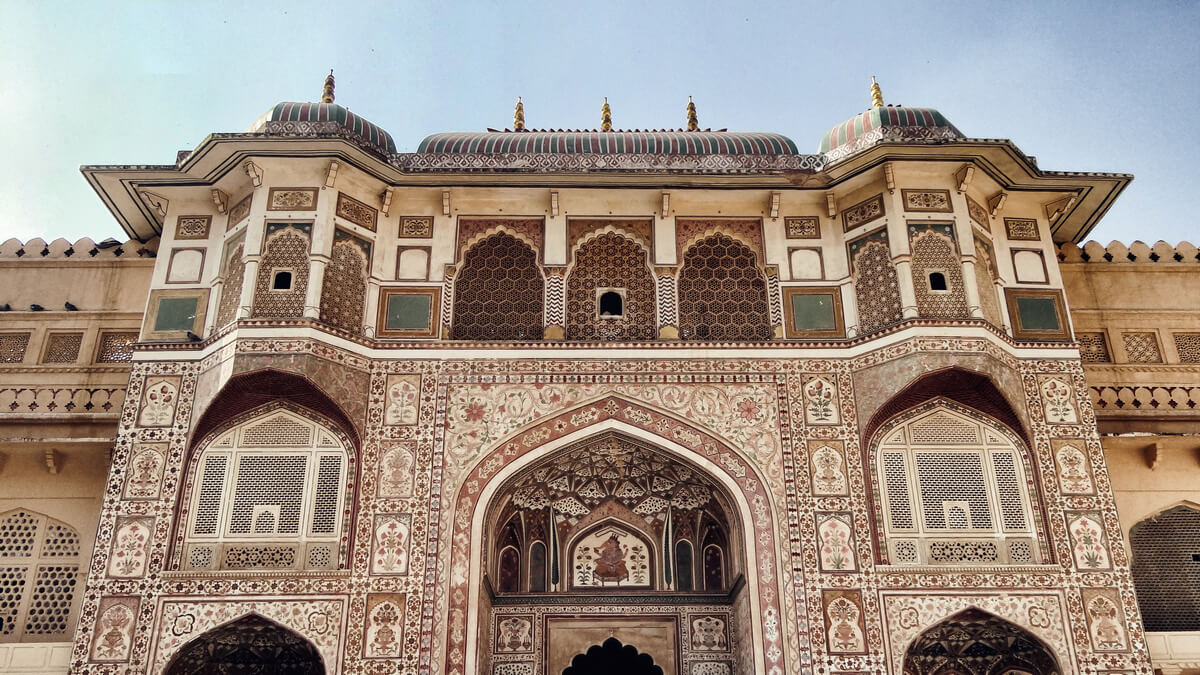
Amer Palace on its hilltop above the lake, Jaipur

Day 7 · Jaipur: A Hilltop Palace Above a Lake, and Patterns Printed by Hand

The morning belongs to Amer Palace, which stands on a hillside above Maota Lake. Inside are courtyards, painted gateways and arches in red sandstone and white marble, and the Sheesh Mahal, a hall whose walls and ceiling are covered in tiny pieces of mirror. Below the palace, a saffron garden sits on an island in the lake. Your leading artist leads a session at a spot chosen in advance, among the arches and painted detail, so you have time to sit with a single doorway or courtyard instead of rushing through the whole palace.

In the afternoon we visit a traditional block-printing workshop, in the craft tradition of the villages around Jaipur. Artisans carve patterns into teak blocks, dip them in natural dyes such as indigo and madder, and press them onto cloth by hand. A single design can need a separate block for every colour, stamped over and over along a length of fabric. You watch the pattern appear, then take a block and try it yourself.

The evening is free to explore Jaipur at your own pace.

Accommodation:
Arya Niwas Jaipur or similar
Included:
Breakfast, Lunch
Sketching Sessions:
Amer Palace
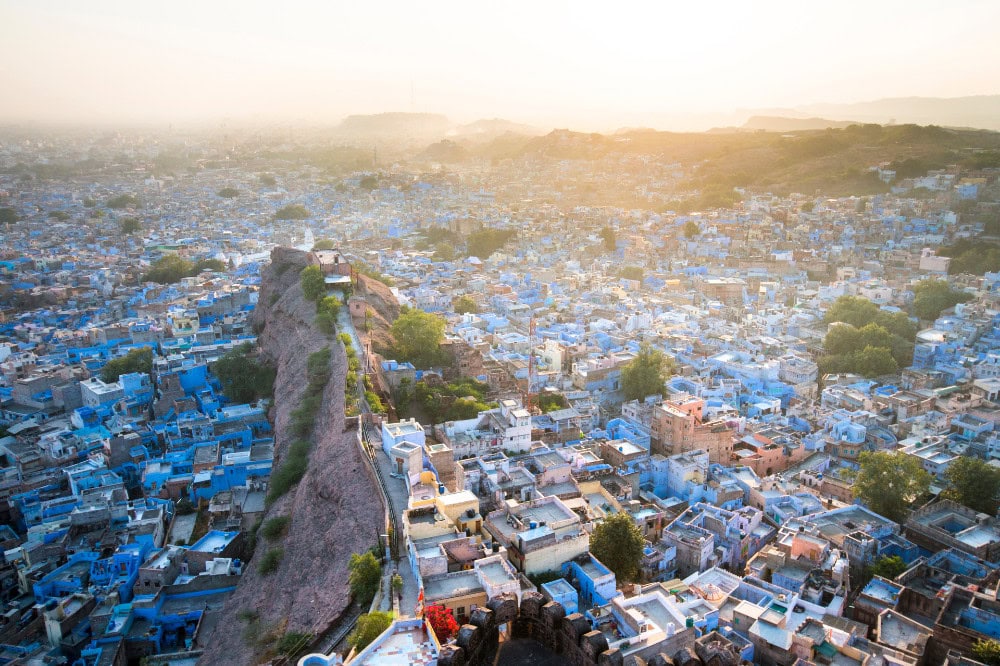
The blue houses of Jodhpur seen from above

Day 8 · Jaipur to Jodhpur: A Slow Arrival in the Blue City

This is a travelling day, and we let it be one. The drive to Jodhpur takes six to seven hours with comfort stops, and the landscape opens up as the road goes west: the land gets drier, the sky wider, and Jaipur’s pink gives way to a different palette. Jodhpur is known as the Blue City, because the old town below Mehrangarh Fort is a sea of blue-painted houses, and tomorrow you start looking at it properly.

By late afternoon we reach The Mandore, a leafy resort with gardens, and the pace drops. There is no formal session after the journey. If energy permits, you can stroll the grounds or try a short colour-noting exercise, simply writing down the colours of a new place before you draw anything. Dinner is together at the resort, with the day of travel behind you.

Accommodation:
The Mandore, Jodhpur
Included:
Breakfast, Dinner
Sketching Sessions:
None
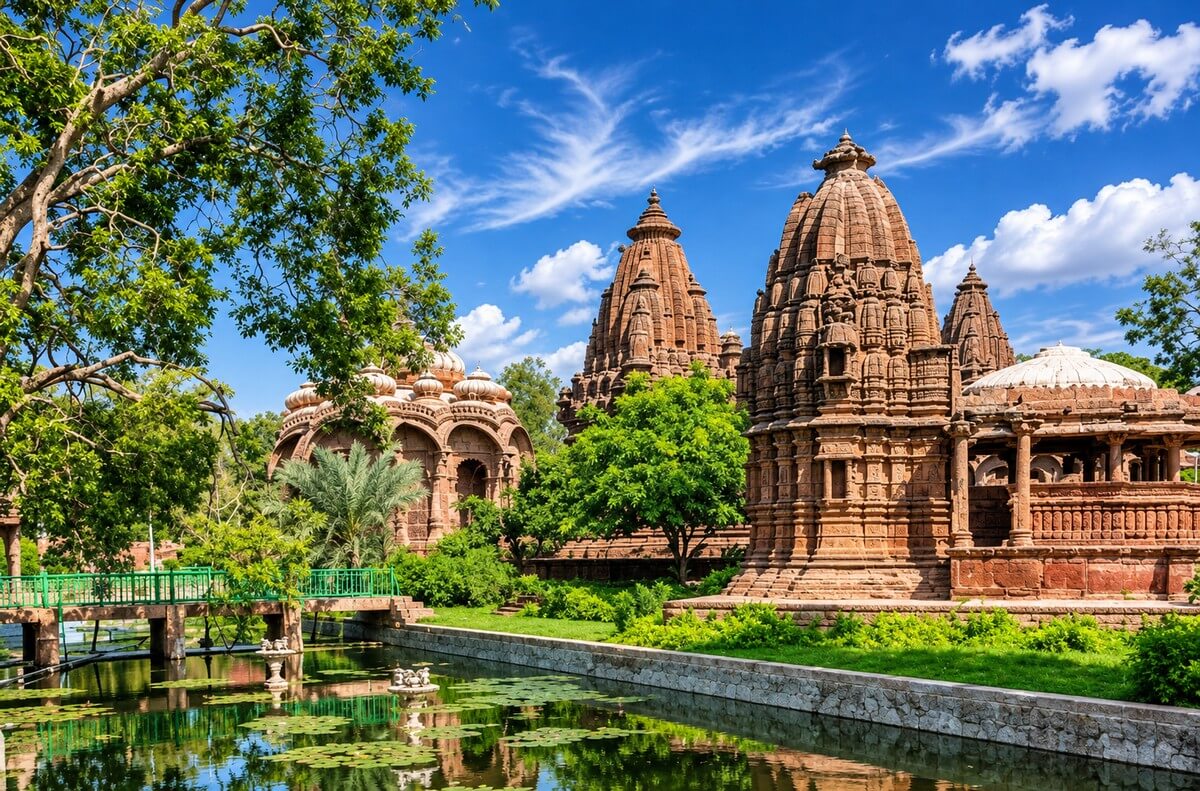
Red sandstone cenotaphs and pond at Mandore Gardens, Jodhpur

Day 9 · Jodhpur: A Forgotten Capital, a Fort of the Sun and the Blue Lanes Below It

The morning starts at Mandore Gardens, where the Rathore rulers held court before Jodhpur existed. Under old trees stand the royal cenotaphs, four storeys of red sandstone with carved pillars and tall spires that rise like temples instead of domes, and grey langurs wander the paths. Nearby, the Hall of Heroes holds figures carved out of the living rock and painted in bright colours. Your leading artist leads a long sketching session, so you have time to study how the sandstone, the carving and the shade play against each other.

In 1459 Rao Jodha moved the capital from here to a rocky hill, and that is where we go next. Mehrangarh, the Fort of the Sun, rises 400 feet above the city, and inside it the palaces are famous for their carved screens and gold filigree. From its ramparts you look over the old town, a maze of blue houses below. Lunch follows, then a rest at the hotel.

In the late afternoon we walk down into those blue lanes for a second session, sitting among doorways and walls the colour of indigo and lime, with the fort above.

Accommodation:
The Mandore, Jodhpur
Included:
Breakfast, Lunch, Dinner
Sketching Sessions:
Mandore Gardens; Old City blue lanes
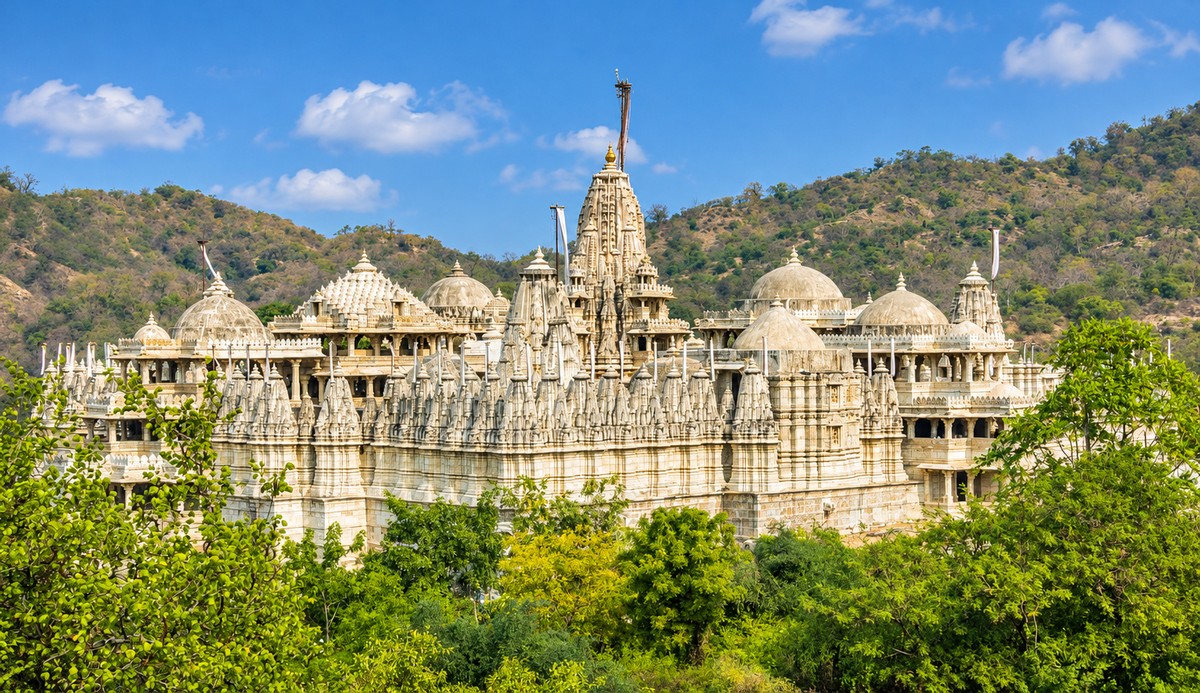
Ranakpur’s white marble Jain temple in the hills
1 / 2

Day 10 · Jodhpur to Udaipur: 1,444 Pillars, and No Two Alike

The road to Udaipur runs south through the Aravalli hills, and halfway along it the valley deepens into forest. In the 15th century a Jain merchant named Dharna Shah dreamed of a celestial palace that floated like a vehicle, and he spent the rest of his life building it here, in white marble, with the patronage of the ruler of Mewar. This is Ranakpur. Inside the temple, 1,444 carved pillars stand in rows, each pillar different from the next, and light moves through them under some eighty domes. The carving looks more like lace than stone, which is why it rewards sitting still.

We walk through the temple respectfully with a guide, so you see the carved pillars and ceilings with your own eyes. Then your leading artist leads a session from an approved spot outside, where the white marble walls and domes rise out of the forest, and you give the page to the temple as a whole: its shape against the trees and the hills behind it. Lunch is on the road.

We reach Udaipur at the end of the day, and our hotel, Udaigarh, sits on the edge of Lake Pichola, a few steps from Gangaur Ghat. Its rooftop looks out over the lake. After a full travel day, dinner is yours to choose.

Accommodation:
Hotel Udaigarh or similar
Included:
Breakfast, Lunch
Sketching Sessions:
Ranakpur
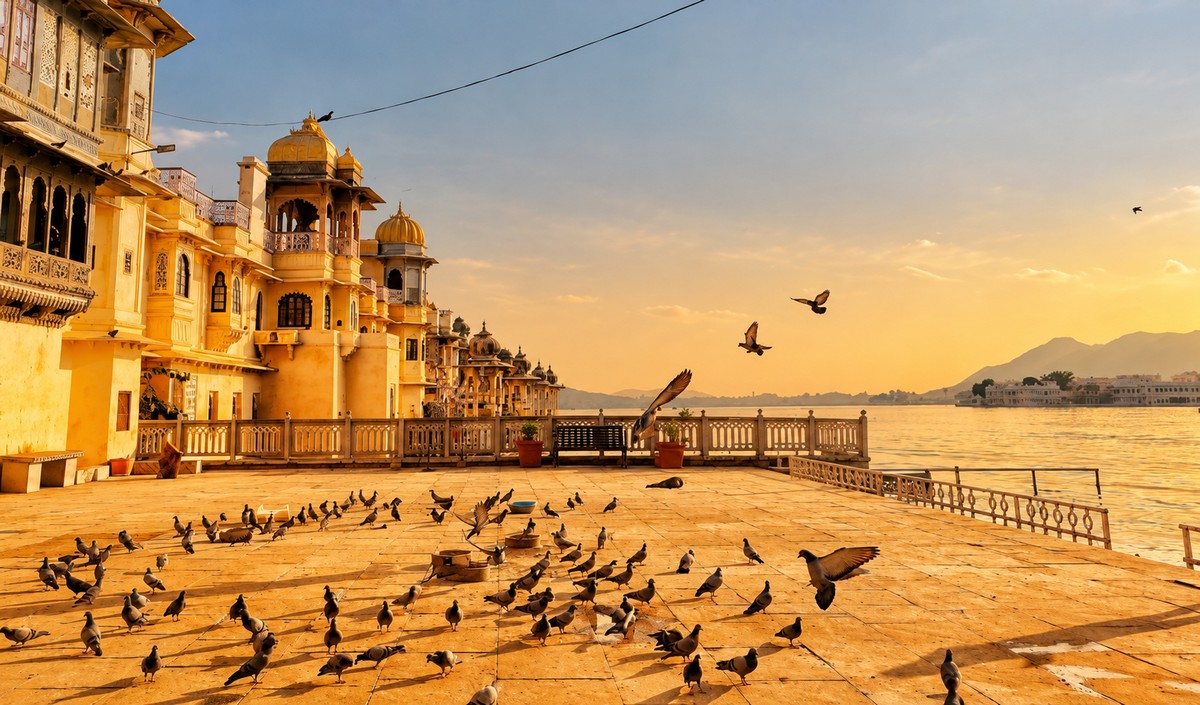
Pigeons on the lakeside ghat at sunset, Udaipur

Day 11 · Udaipur: A Palace Above the Lake, and Steps Down to the Water

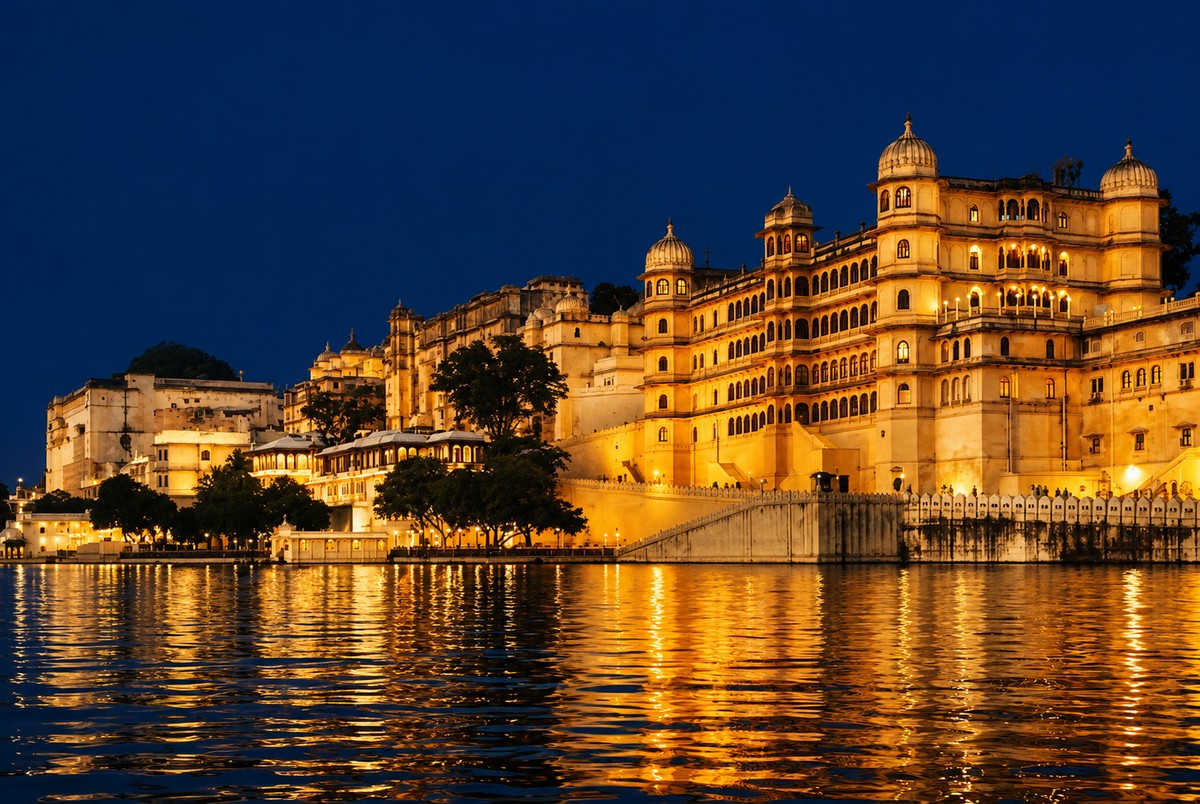
The morning begins at the City Palace, which rises above Lake Pichola on the ridge where Maharana Udai Singh II founded Udaipur in the 16th century. It was not built in one go. Each ruler of Mewar who followed added courtyards, balconies and towers over roughly four centuries, so you walk through layers of architecture instead of a single style. In the Peacock Courtyard, three glass-mosaic peacocks glitter on the wall, one for each season, and from the palace’s windows and terraces the lake spreads out to the Aravalli hills.

From the palace we walk down to Gangaur Ghat, where broad steps lead into the water, and the afternoon is yours to draw. A triple-arched gateway frames the descent. Boats rock at the edge of the lake, the old city’s façades crowd the shore, and everything reflects in the water. Your leading artist helps you choose: a flight of steps, a boat, the reflection of a wall.

Our hotel is only a couple of minutes’ walk away, so you are drawing the place you wake up next to. Lunch is at a local restaurant, and the rest of the day is free to wander the old city’s lanes and craft shops at your own pace.

Accommodation:
Hotel Udaigarh or similar
Included:
Breakfast, Lunch
Sketching Sessions:
Gangaur Ghat
Jagdish Temple spire framed by a scalloped arch, Udaipur

Day 12 · Udaipur: A Rooftop Facing the Temple, Brushes of Squirrel Hair, and the City Palace Across the Water

The morning begins above the old city, on the rooftop of Mayur Cafe, which sits directly opposite Jagdish Temple. The temple fills the view, its tall spire rising above the lanes while the street below fills with people. Your leading artist leads a session here, and the rooftop gives you a front-row seat to a place that is busy at ground level and calm from above.

Later we visit a miniature-painting studio, where the Mewar tradition of Udaipur is still practised. Painters here have worked since the 16th century with brushes made from squirrel hair, so fine that a single stroke can be a hair’s width. The colours are ground from stones such as lapis lazuli and malachite and applied to handmade paper. We watch an artist work at close range, which is a good way to understand how patient a small painting can be. This is a visit rather than a session, and the rest of the afternoon is yours.

As the light softens, we gather at Ambrai, the restaurant of Amet Haveli, an old lakeside haveli. It stands at the water’s edge, directly across the lake from the City Palace, so the whole long façade lies in front of you with the Lake Palace floating beside it. This is our second session of the day, a chance to put the palace and the water on the page as the colours change. Dinner follows here, with the palace lights coming on across the lake.

Accommodation:
Hotel Udaigarh or similar
Included:
Breakfast, Dinner
Sketching Sessions:
Mayur Cafe; Ambrai
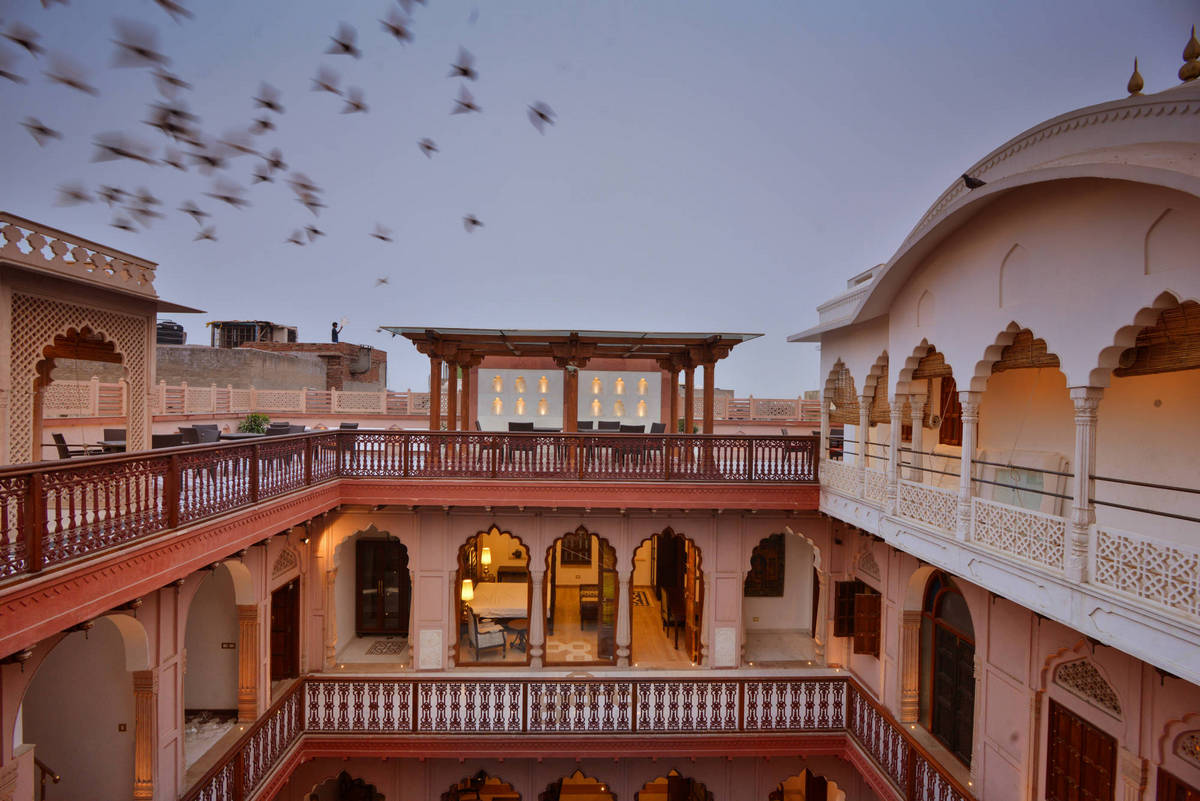
Courtyard balconies of a restored haveli in Old Delhi

Day 13 · Udaipur to Delhi: The Lanes of Old Delhi, Kites Over the Rooftops, and a Farewell in a Restored Haveli

After breakfast, a short flight takes us to Delhi, where we settle into our hotel and take a quiet break. In the afternoon we walk into Old Delhi, the walled city of Shahjahanabad. It was built in the 17th century by Shah Jahan, the same emperor behind the Taj Mahal you met on Day 4, when he moved the Mughal capital here from Agra. Our curated heritage walk threads through its lanes, past old havelis, crowded bazaars and small shops that have traded for generations, in a neighbourhood where history is still part of daily life.

The walk ends at Haveli Dharampura, a 19th-century mansion tucked into the narrow lanes. It was crumbling when its restoration began, and tenants had divided it into dozens of small rooms. Over several years it was rebuilt with the lime plaster and thin bricks of its own period. UNESCO’s Asia-Pacific heritage awards recognised the work. We climb to the rooftop, where kite-flying has long been a favourite pastime in Old Delhi. As the light softens, colourful kites rise over the rooftops, and the city seems to glow around us.

Then we gather for a farewell dinner in the haveli itself, with traditional cultural entertainment where arrangements allow. Over local flavours, sketchbooks come out one last time, and everyone shares favourite pages, unexpected discoveries and the small moments that made the journey their own.

Accommodation:
Central Delhi hotel
Included:
Breakfast, Dinner
Sketching Sessions:
None (informal sketchbook sharing at dinner)
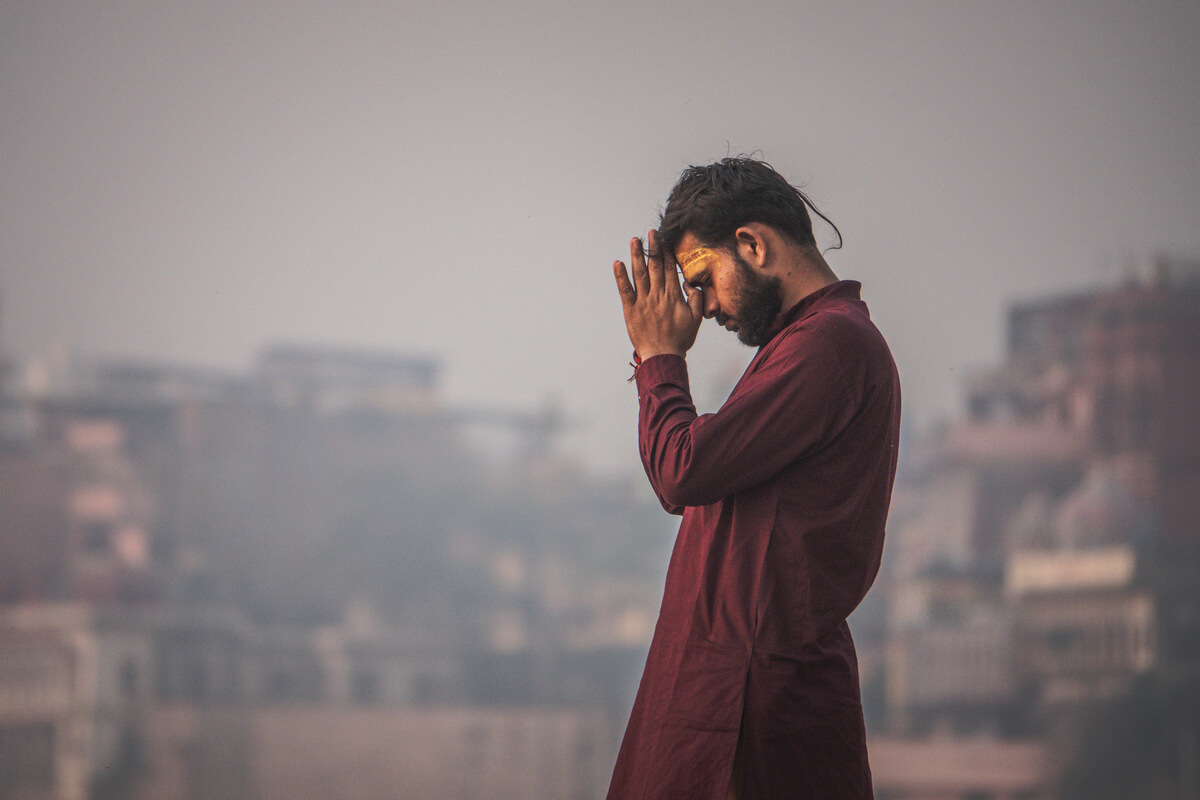
A man in prayer above the rooftops of Old Delhi

Day 14 · Delhi: Take the Stories Home

After a final breakfast at the hotel, we say our goodbyes and you head to Delhi airport, with individual transfers timed to your own departure. In your bag is a sketchbook that is no longer blank. It holds Delhi’s tombs, the Taj Mahal from an unexpected side, a stepwell, rooftops, lakes and lanes, each page drawn in the place it shows. Over the weeks and years to come, those pages will bring the journey back more vividly than any photograph.

Included:
Breakfast
Sketching Sessions:
None

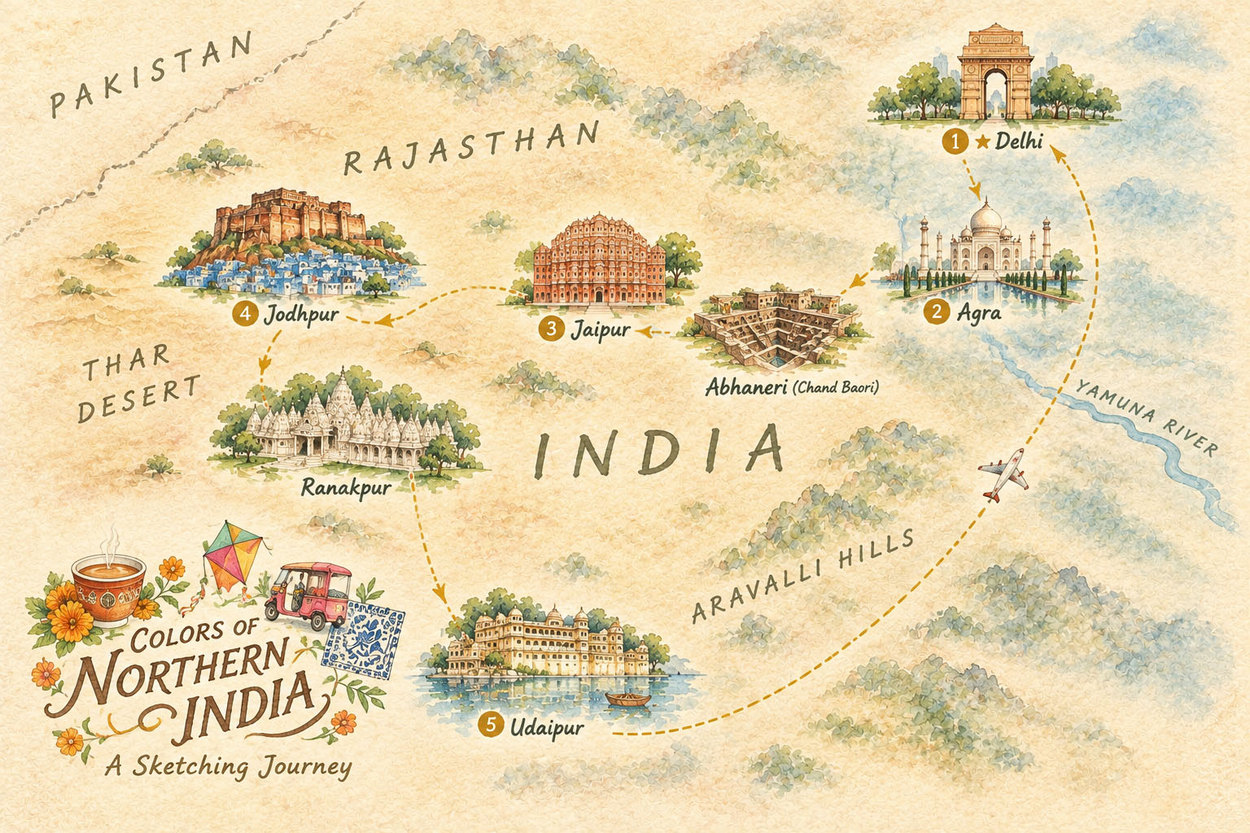
Trip Map

Illustrated watercolor map of the Colors of Northern India route: Delhi, Agra, Abhaneri (Chand Baori), Jaipur, Jodhpur, Ranakpur and Udaipur, with a return flight from Udaipur back to Delhi

FAQs

Have more questions?

Go to FAQ Page